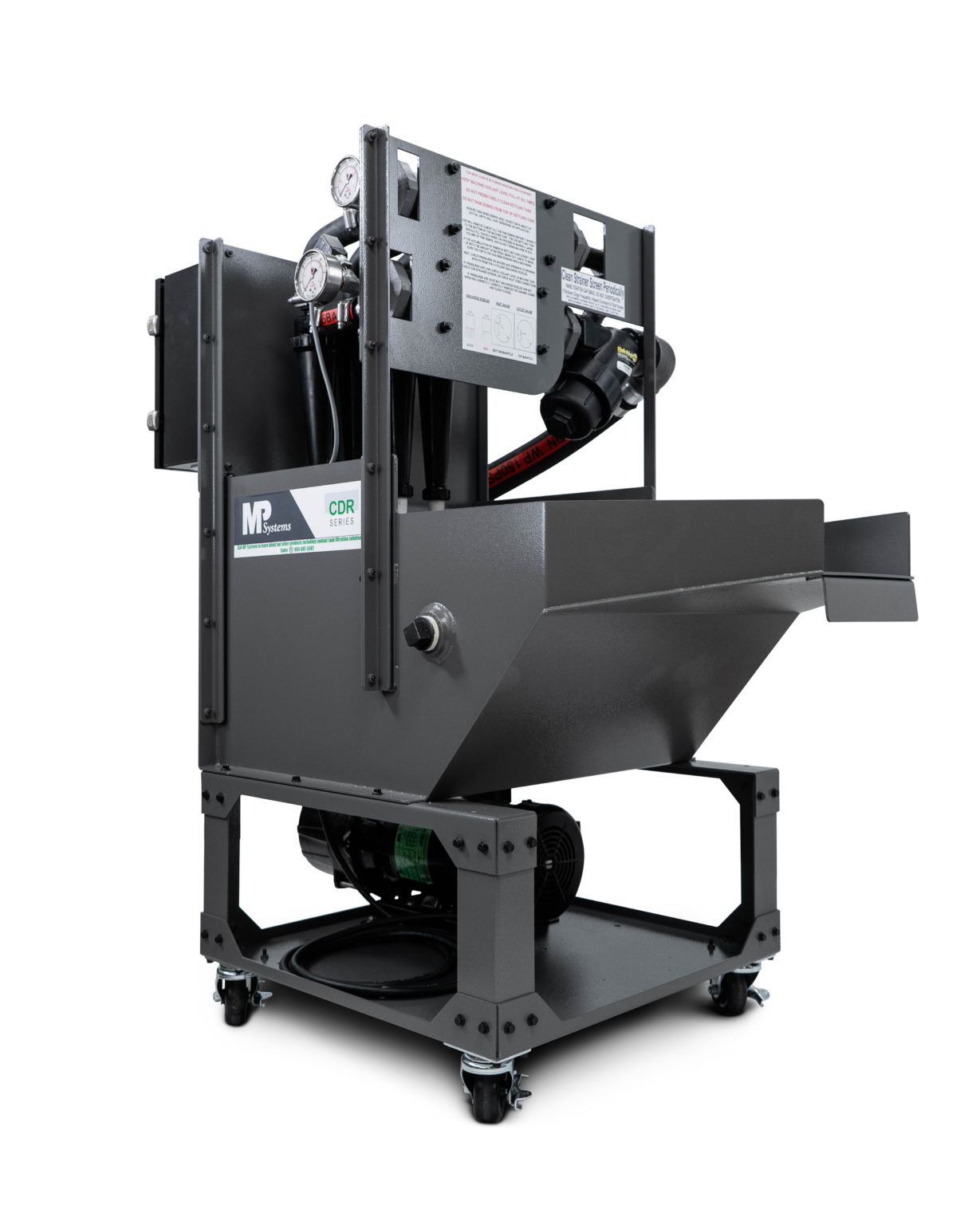
CYCLONIC DEBRIS REMOVAL

Engineered for applications affected by sludge and small particulates leading to compromised machine tool performance.

Cyclonic Debris Removal excels in applications where conventional filter media would blind off, or magnetic filtration is not effective. This system was created to solve issues where the Purge was not appropriate.

CDR effectively filters dust and hard sharps that can bypass conventional filtration systems, increasing machine and tooling lifespan and providing coolant filtration with no filter media. Perfect for automated machining running multiple shifts/unattended machining.

CDR80

  • Up to 80GPM flow rate
  • Closed loop system allows for uninterrupted filtration
  • Filtration down to 3 micron
  • Standard 208/230V(480V Optional)
  • PLC Display
  • Low maintenance; quick and easy clean outs
  • No disposable filter media
  • Cleanable pre-filter
  • Installation kit included
  • Tall base option available
  • 2 year parts warranty

HOW CDR WORKS

The CDR utilizes four expertly engineered hydrocylcones that separate the hard sharp particles that typically stay suspended in a machine's coolant. The CDR's 3HP pump produces up to 80GPM flow rate in order to quickly capture harmful debris before it is recirculated through the machine.
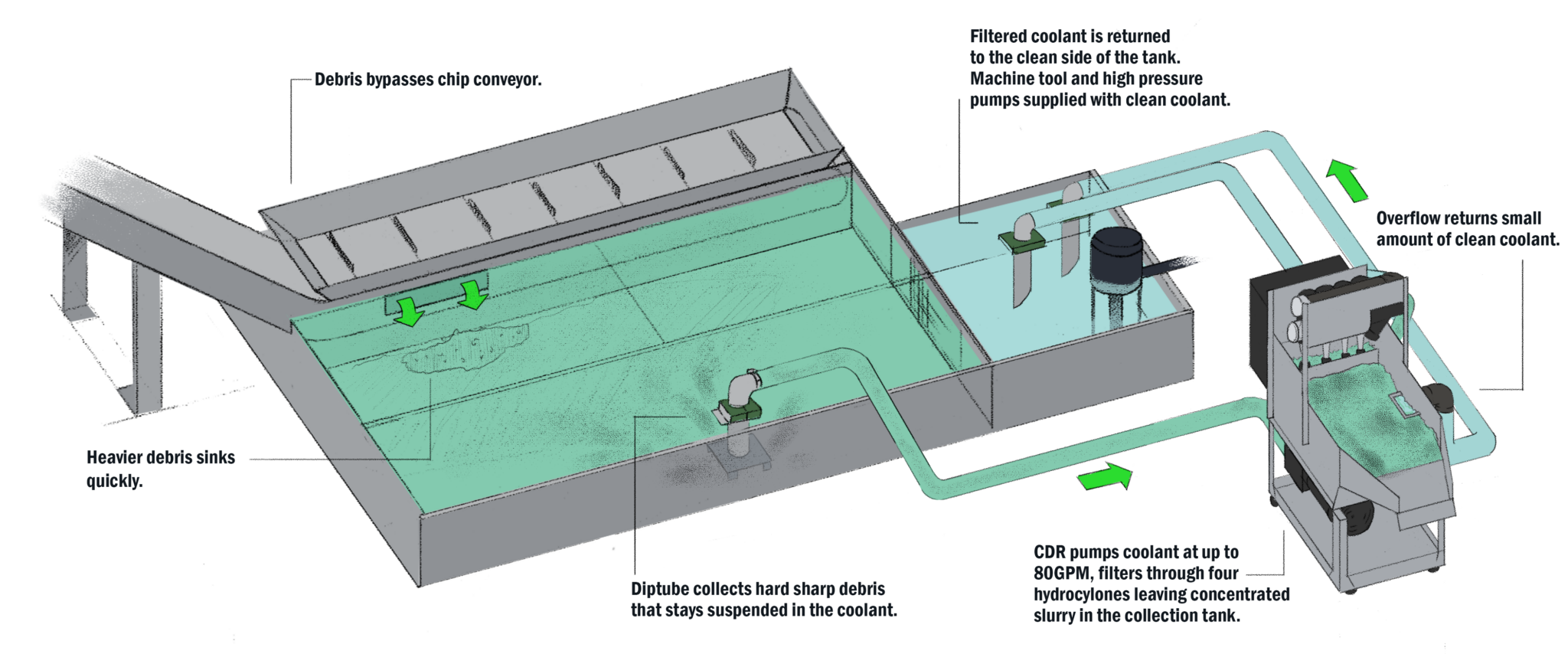
CDR HowItWors 24

The debris is separated out, and lands in the settling tank where it can easily be scraped out. The clean coolant returns to the machine tool tank, supplying your pumps with fresh coolant and protecting your machine from wear.

IS CDR CORRECT FOR MY APPLICATION?

CDR Tank Selection

Cyclonic Debris Removal is designed for customers producing significant amounts of fine dust-like contaminants that stay suspended in coolant causing premature wear throughout their machines. These issues are most common in shops running multiple shifts machining high volumes of hot finished parts for automotive, agricultural, or heavy industrial applications. The CDR is most effective in filtering heavier materials such as cast iron and aluminum.

The CDR utilizes a dip tube to capture suspended contaminants before they can be recirculated back through the machine and wear expensive components.

CDR Tank Selection

Cyclonic Debris Removal is designed for customers producing significant amounts of fine dust-like contaminants that stay suspended in coolant causing premature wear throughout their machines. These issues are most common in shops running multiple shifts machining high volumes of hot finished parts for automotive, agricultural, or heavy industrial applications. The CDR is most effective in filtering heavier materials such as cast iron and aluminum.

The CDR utilizes a dip tube to capture suspended contaminants before they can be recirculated back through the machine and wear expensive components.

CDR Tank Selection

Cyclonic Debris Removal is designed for customers producing significant amounts of fine dust-like contaminants that stay suspended in coolant causing premature wear throughout their machines. These issues are most common in shops running multiple shifts machining high volumes of hot finished parts for automotive, agricultural, or heavy industrial applications. The CDR is most effective in filtering heavier materials such as cast iron and aluminum.

The CDR utilizes a dip tube to capture suspended contaminants before they can be recirculated back through the machine and wear expensive components.

CDR Tank Selection

Cyclonic Debris Removal is designed for customers producing significant amounts of fine dust-like contaminants that stay suspended in coolant causing premature wear throughout their machines. These issues are most common in shops running multiple shifts machining high volumes of hot finished parts for automotive, agricultural, or heavy industrial applications. The CDR is most effective in filtering heavier materials such as cast iron and aluminum.

The CDR utilizes a dip tube to capture suspended contaminants before they can be recirculated back through the machine and wear expensive components.

CDR Shape Density Chart
CDR Selection Dots RED

If the debris has both the wrong shape and specific gravity, the CDR would not be the correct filtration solution.

CDR Selection Dots GREEN

If the debris has the correct shape and specific gravity, the CDR would be the perfect filtration solution.

CDR Selection Dots G R

If the debris has the wrong shape but correct specific gravity or vise versa, we would require a test sample to determine if the CDR is the correct filtration solution.

RETURN ON INVESTMENT

Averaging over a CDR’s life, it will typically pay for itself in 2 years.

WEB ROI CHART
  • COST OF REPLACING SET OF WAYCOVERS: $5,000-$20,000
  • COST OF REPLACING BALL SCREW/LINEAR GUIDES: Starting at $10,000+ per axis
  • TOOL HOLDERS: $50-$100 each
  • CHUCK: $4,000-$20,000
  • MACHINES RUN IN SEVERE ENVIRONMENTS TYPICALLY NEED A MAJOR REBUILD IN 5-10 YEARS: $150,000
  • COOLANT COST IN & OUT: $450-$1,050 per tank cleanout
  • LABOR COST: $100-$640 per tank cleanout

Damage and maintenance costs increase over time, but wear may not be noticeable until it’s too late.

CUSTOMER TESTIMONIAL
Daryl O.

Floor Manager

"Cutting the hot finished parts that we do produces a lot of dust which was destroying our machines and blinding off filter bags hourly. Now our machines run longer with almost no unexpected shutdowns for repairs and parts are flying out the door.

In my eyes, every machine cutting cast parts like ours needs a CDR."

Joe. S

Productivity Specialist

"This shop's first CDR unit was installed on a brand new horizontal mill machining aluminum parts.

Within minutes of the first cut, the CDR was already capturing the fine aluminum swarf that would typically build up in the coolant tank and wear the machine over time.

Now we're ordering a CDR for every machine cutting these parts. It's impressive how effective this system is!"